It’s time to repot your african violet if you notice any of the following things:
- Your african violet looks like a giraffe/has a really long neck
- It’s been 6-8 months – to keep african violets at their best, it’s a good idea to repot them about every 6 months depending on how they look.
- If your violet looks less vigorous (has lots of old fading leaves and hasn’t flowered in awhile).
Examples of Violets in Need of Repotting
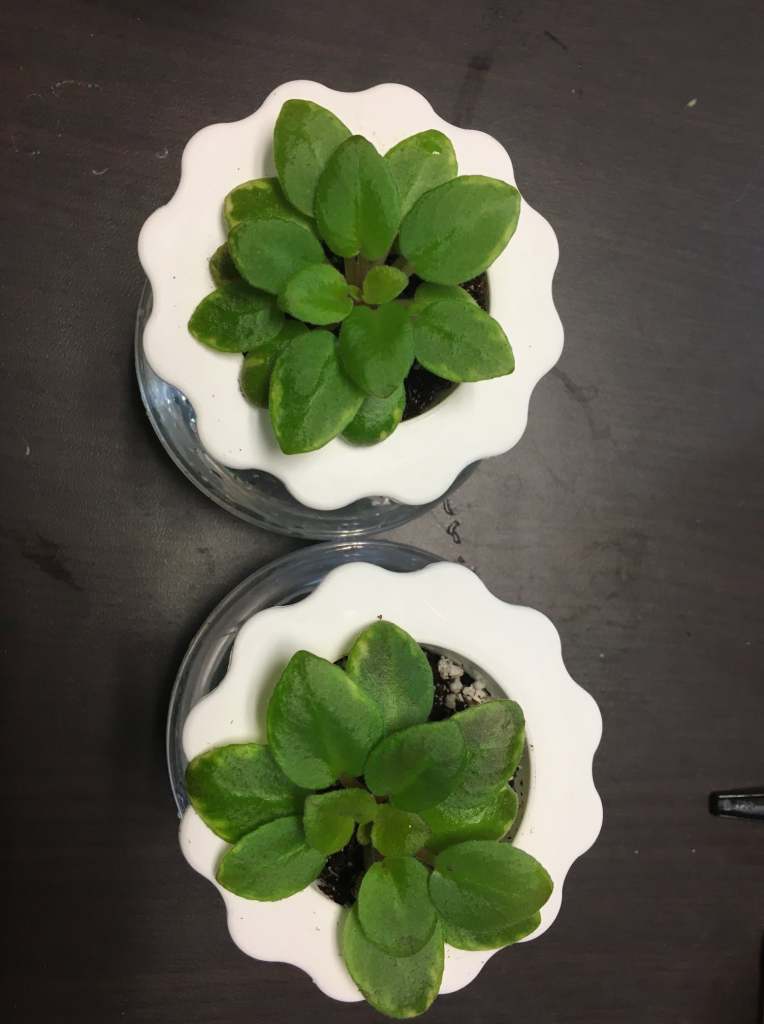
This miniature African violet has grown into two crowns, with long necks and dying lower leaves.
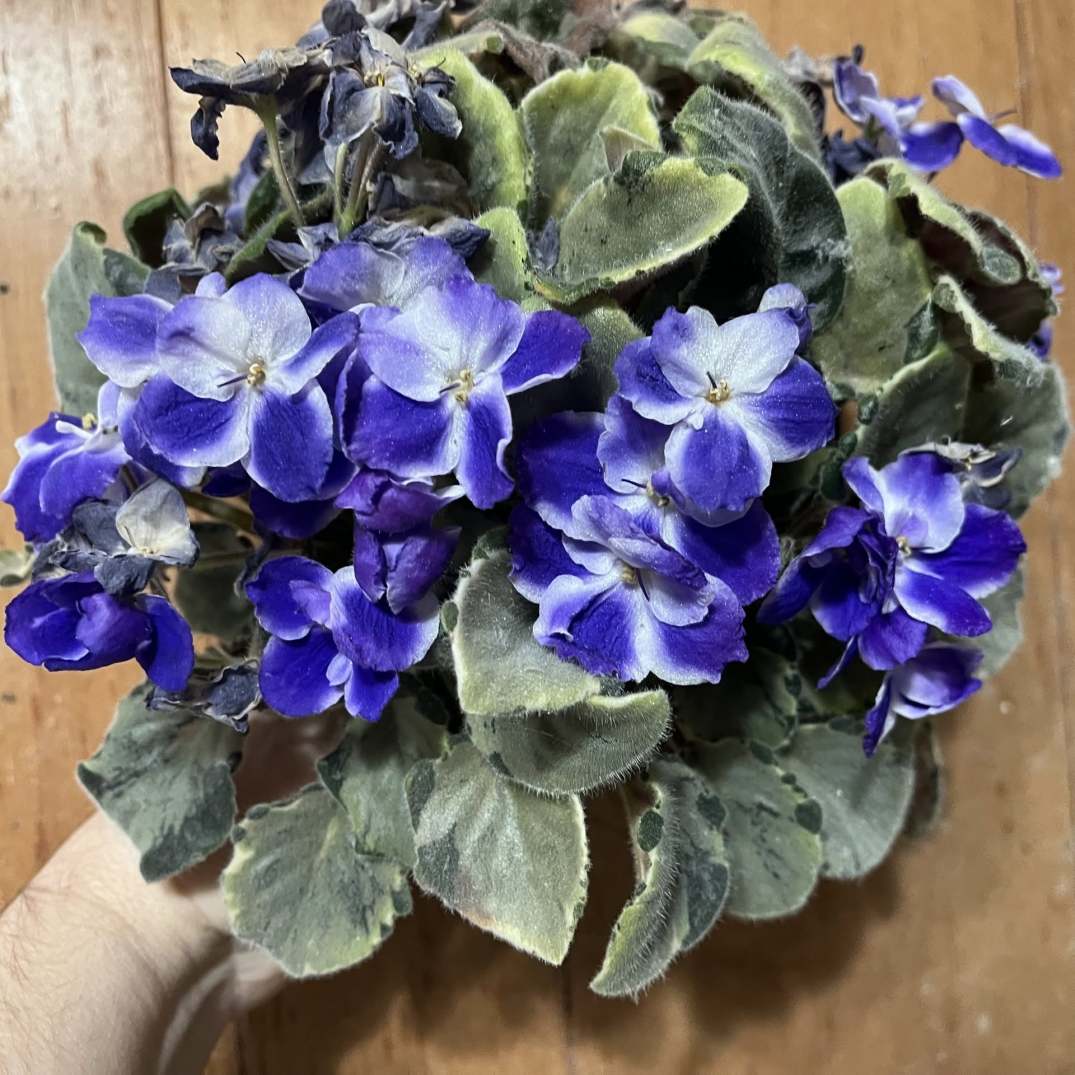
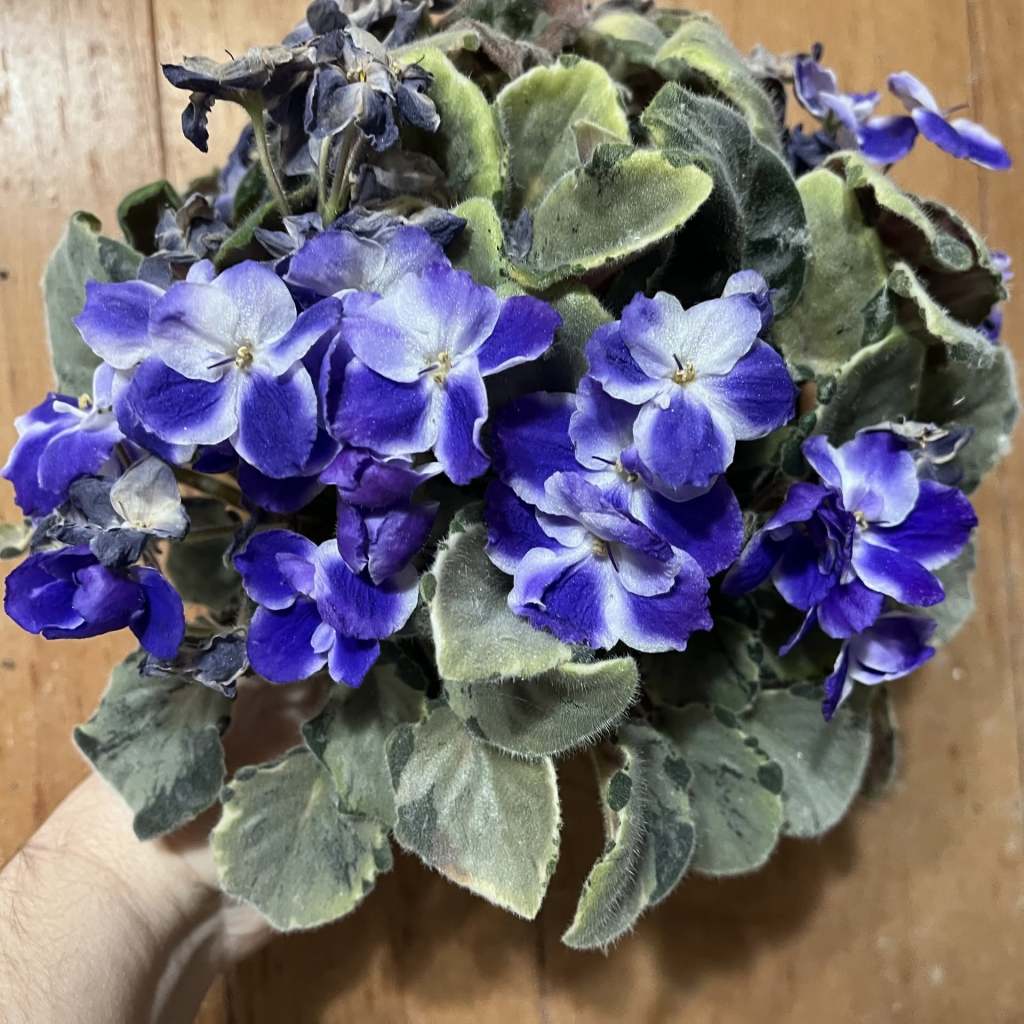
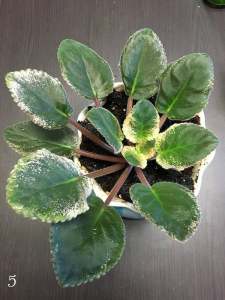
The plant below is a Harmony’s Little Stinker that has developed 4 crowns. While this plant is not completely unhappy, it really needs to be split up to allow for good air flow and so that the plant is only devoting energy to growing ONE crown.
How should you repot an african violet?
Here are the steps to follow:
- Decide whether the african violet needs to be repotted. The plant above has a very long neck and there is a large amount of mineral build up in the pot. Fertilizer builds up minerals over time in the soil and pot and will stop it from functioning as well and potentially will also cause the plant roots distress if it goes on for too long.
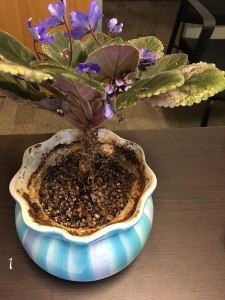
- Remove the African violet from the pot and cut the roots off at the base.
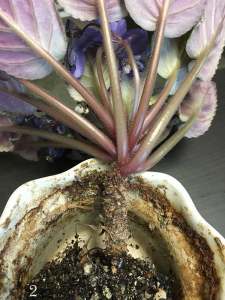
- Then cut the neck so that it’s only about an inch or so long at a 45 degree angle. African Violets are masters of regrowing roots and I have never had a plant die from doing this step.
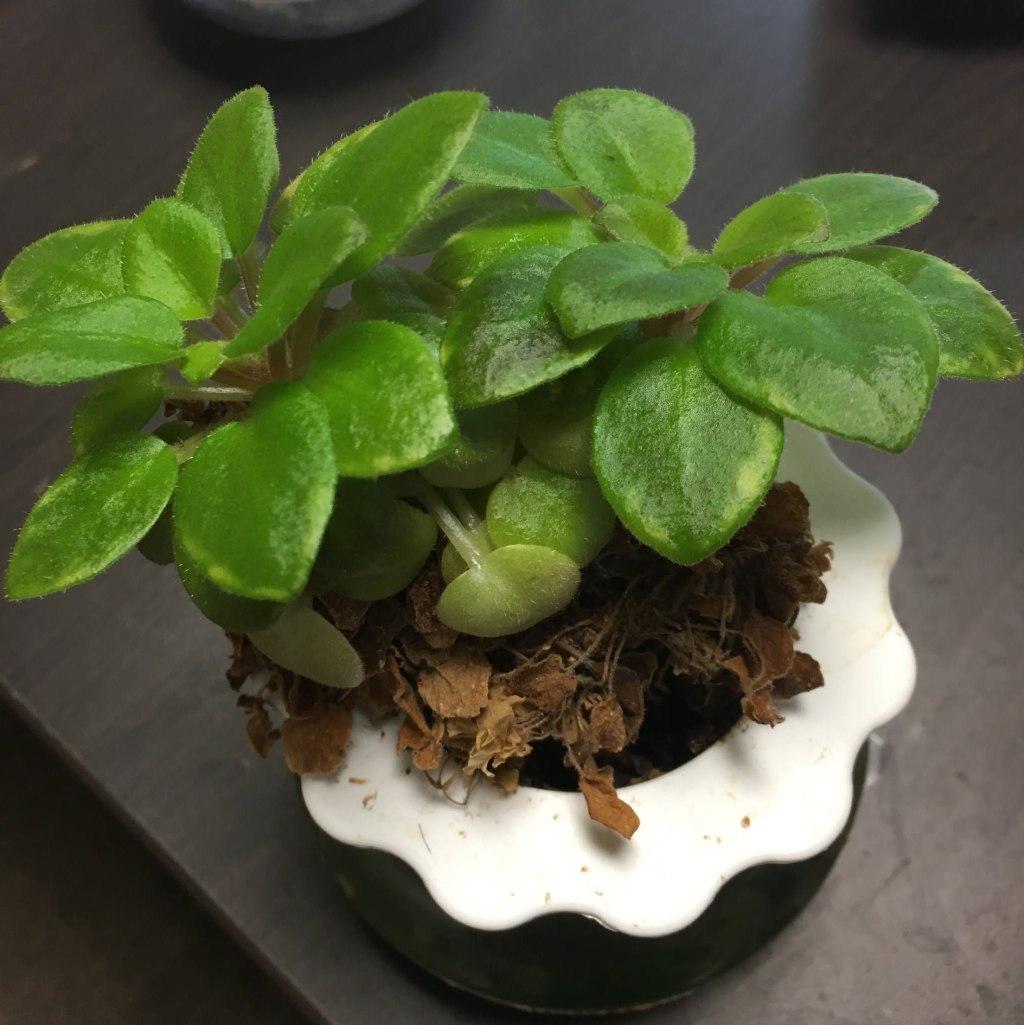
Optional: you can also scrape the remaining neck gently with a knife to remove the leaf callouses. This will cause the plant to form more roots. The plant will still re-root if you don’t scrape the neck. In the example photo below, I did not scrape the neck but only made the 45 degree cut and the plant grew back healthy and happy…
Now is a good time to gently break off any old outer leaves so that there is only 3-4 rows of leaves left on the plant. This will help it use it’s energy to developing new roots and growth.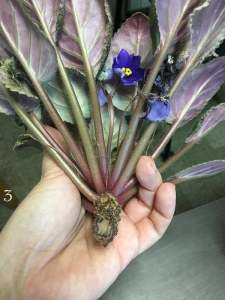
- Soak the pot in 50/50 white vinegar for a while to remove minerals if needed. (Keep an eye on self-watering ceramic pots, sometimes they stop pulling water through the unglazed inner pot if this is not done. While the pot is soaking, you can wrap the African violet neck with a damp paper towel or put it in a temporary pot with moist soil until the regular pot is ready.
Rinse and refill the pot with fresh African violet soil. Then poke a hole big enough for the neck and gently slide it in. If you are using a self-watering pot, make sure you have at least 50% perlite mixed in with the African violet soil of your choice. If the pot is self-watering and you keep the reservoir full, no further action is required.
If you are using a regular pot that does not self-water, you will need to put a clear plastic bag over the african violet for a couple of weeks, or place it in a humidity dome, until the roots form. This is because without roots, the plant can only absorb moisture through its leaves to survive and regular soil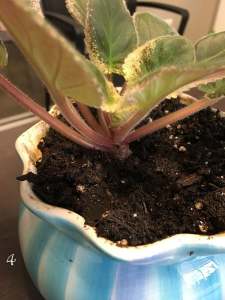
- Here is the finished repotted african violet
What if the African Violet has more than one neck/crown?
There are two choices with this. You can either carefully try to cut the plant with a knife so that each crown has some roots OR you can simply accept that at least one crown will not have roots.
These rootless crowns either have to be bagged if in a regular African violet with a clear plastic bag, placed under a humidity dome OR placed in a self-watering African violet pot. I use self-watering or wick watering for the majority of my plants.
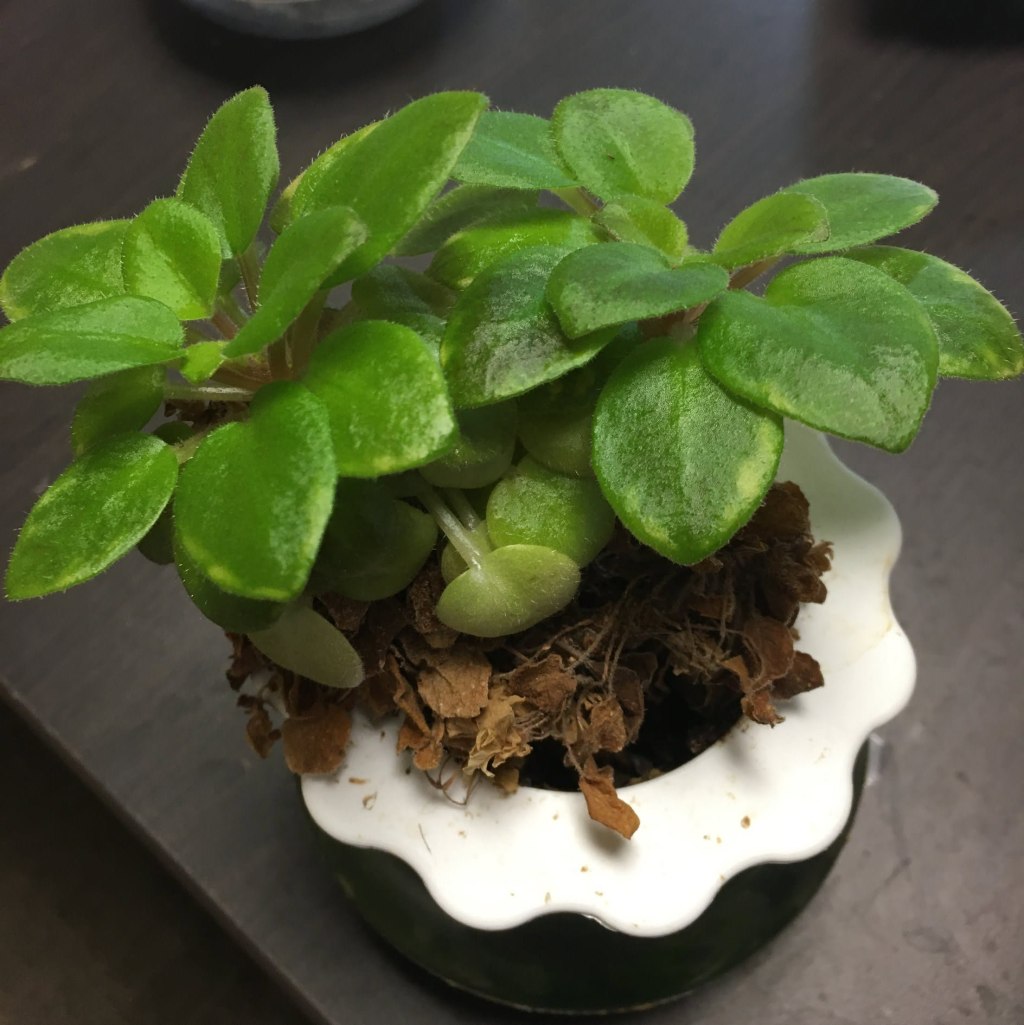
In the case below, I put both crowns in their own pot and both crowns grew into nice healthy plants.
Before:
After repotting: